← Blog · 24 July 2026 · Travel · Immigration · Visitors
ETIAS Is Delayed Again: What It Means for Visitors Coming to See You in Germany
The EU's new ETIAS travel system was due in 2026. That target just got dropped. Here's what's confirmed, and who it actually affects.
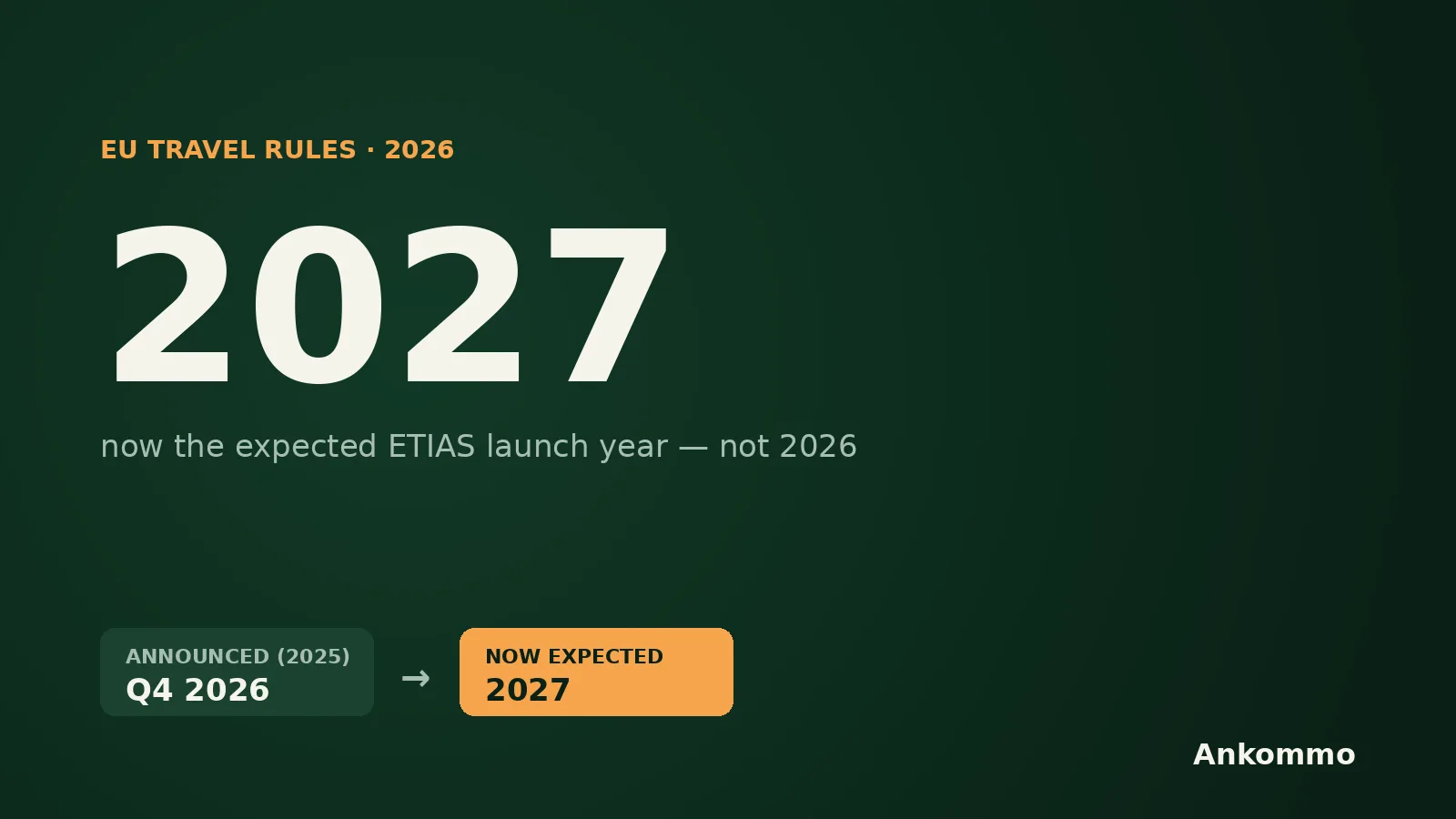
If you've been telling family or friends abroad "you won't need a visa to visit me in Germany, just remember to register for that new travel thing before you fly", you can drop that last part for now. The EU's new travel authorization system, ETIAS, was supposed to go live sometime in the last quarter of 2026. As of this month, that date has quietly disappeared from the official rollout pages, and the people building it have said 2026 isn't happening. (European Commission)
Here's what ETIAS actually is, why it slipped again, and (more usefully for anyone living in Germany) who it does and doesn't affect.
What ETIAS actually is
ETIAS (the European Travel Information and Authorisation System) is not a visa. It's a pre-travel screening step for people who currently need no visa to enter the Schengen area for short stays. Roughly 60 nationalities fall into this "visa-exempt" category: the US, UK, Canada, Australia, Japan, and South Korea among them. Once ETIAS is live, those travelers will need to apply online before flying, pay a small fee, and get an automated authorization tied to their passport. It does not replace or change anything for people who already need a visa to enter Germany. (European Commission)
It's the EU's version of the US ESTA system: quick, mostly automatic, and meant to flag security or irregular-migration risks before someone boards a plane rather than after they've landed.
Why this matters more if you live here than if you're just visiting
For most of Ankommo's readers, ETIAS itself is a non-event. If you're in Germany on a study visa, work visa, Blue Card, or any residence permit, you're not in the "visa-exempt" bucket ETIAS targets; you went through a different process to get here, and none of that changes. Our Germany Visa Checker still walks through the actual permit routes that apply to you; ETIAS isn't one of them.
Where it does matter: if you're the one telling visa-exempt family or friends they're fine to book a trip to see you, you're the one who'll field the "wait, do I need to do something first?" question when they're packing. Right now the honest answer is: not yet, and there's no fixed date for when that changes.
What actually happened this month
The European Council announced in March 2025 that ETIAS was on track for the "last quarter of 2026." As of July 2026, the official EU travel pages have removed that target altogether, now saying only that a specific date will be announced several months ahead of launch. (eu-LISA)
eu-LISA (the EU agency actually building the system) has concluded a 2026 launch isn't realistic. The bottleneck is upstream: ETIAS is designed to run on top of the Entry/Exit System (EES), the EU's new biometric border-registration system, which has had its own rollout problems since it started phasing in. Until EES stabilizes, ETIAS can't switch on. The agency's board met in June 2026 and is due to meet again in September, when a revised timeline is expected. Until then, "sometime in 2027" is the working assumption among people tracking the file closely, though nothing is confirmed. (eu-LISA)
This is not ETIAS's first delay. The system has slipped several times since it was legislated back in 2018, largely for the same reason: it depends on other EU IT systems reaching maturity first.
What it will cost, when it does arrive
The details that are settled, regardless of when launch day lands:
- €20 per applicant, confirmed by the European Commission in mid-2025, up from the €7 figure originally written into the 2018 regulation.
- Free for anyone under 18 or over 70.
- Valid three years, or until the passport used to apply expires, whichever comes first. It's not a one-trip authorization; one approval covers repeat short visits within that window.
- Covers short stays only: up to 90 days in any rolling 180-day period, the same limit that already governs visa-free Schengen travel today.
- The only legitimate way to apply, once it's live, will be the official portal at travel-europe.europa.eu or the official EU app. Third-party sites already exist that charge a markup to "process" ETIAS applications that don't even exist yet, worth warning visitors about in advance.
What to actually tell people planning a visit
Nothing changes today. Visa-exempt visitors to Germany still enter exactly as they do now: passport, and the existing 90-in-180-day limit, no online authorization step. The only practical advice worth passing on:
- Don't pay anyone for an ETIAS application right now; there's no live system to apply to.
- If you're planning a visit for later in 2027, it's worth checking the official EU travel portal closer to the date, since a firm launch window should be public a few months out once eu-LISA settles on one.
- If a visitor is coming for longer than a short stay (to help you move in, for instance), ETIAS was never going to cover that anyway; longer stays already require the relevant visa regardless of nationality.
The bottom line
ETIAS is a real, already-legislated system, not a rumor: the €20 fee and three-year validity are locked in. What isn't locked in is when it actually switches on: the 2026 target has been dropped, the delay traces back to the EES rollout it depends on, and 2027 is the current best guess rather than a confirmed date. If you live in Germany and have visa-exempt visitors on the calendar, there's nothing to prepare yet beyond knowing the current rules haven't changed, and being ready to wave off anyone trying to sell an ETIAS application before one exists.
Related on Ankommo
Figures verified against the official EU sources below as of July 2026. ETIAS's launch date is unconfirmed and under active revision, so always check the official portal before making travel plans around it.
Frequently asked questions
Do I need ETIAS if I already have a German residence permit or long-stay visa?+
No. ETIAS only applies to people who currently need no visa at all for short Schengen stays of up to 90 days in any 180-day period. If you hold a German residence permit, national (D) visa, or any other long-stay authorization, ETIAS doesn't apply to you: it's built for your visa-exempt visitors, not for you.
When will ETIAS actually launch?+
There's no confirmed date. The EU had targeted the last quarter of 2026, but as of July 2026 that target has been removed from the official ETIAS pages, and eu-LISA (the agency building the system) has said 2026 is no longer feasible. A revised timeline is expected after eu-LISA's board meets again in September 2026; several reports now point to 2027.
How much will ETIAS cost, and how long is it valid?+
€20 per applicant, confirmed by the European Commission. It's free for applicants under 18 or over 70. Once granted, it's valid for three years or until your passport expires, whichever comes first. It isn't per trip.
Sources

Guide by
Abdullah
Creator of Ankommo · Based in Germany
I moved to Germany and built Ankommo to help others navigate the same process I went through. We offer 1-on-1 video consultations on visas, Ausbildung applications, citizenship requirements and settling in.
Book a 1-on-1 consultation