← Blog · 20 July 2026 · Immigration · Residence Permit · Bureaucracy
Germany's New Digitization Law: Your Fingerprints Are Now Valid for 7 Years
Germany passed a law in July 2026 letting offices reuse your fingerprints and photo for years: no repeat biometrics appointment at every renewal.
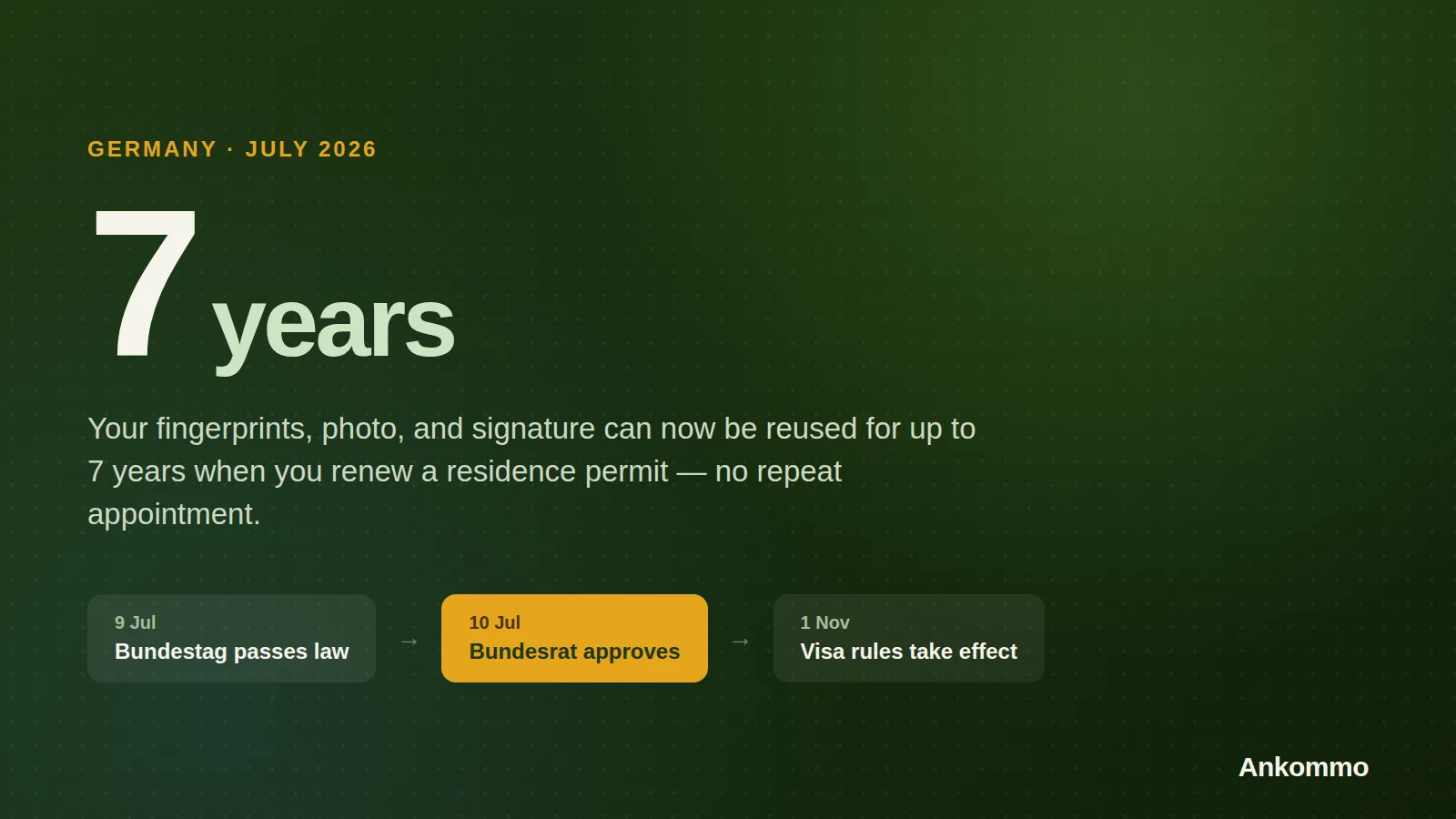
If you've ever sat in a waiting room to redo fingerprints you'd already given the Ausländerbehörde a year earlier, Germany just passed a law aimed squarely at that problem. On 9 July 2026, the Bundestag passed the Migrationsverwaltungsdigitalisierungsweiterentwicklungsgesetz, a law developing the digitization of migration administration (mercifully shortened to MDWG), and the Bundesrat approved it the very next day, 10 July, at its last plenary session before the summer recess.
The headline change for anyone actually living through German immigration bureaucracy: your biometric data can now be reused, not recollected, at your next renewal appointment.
The core change: no more repeat biometrics
Every limited residence permit in Germany is now issued as an electronic residence permit (elektronischer Aufenthaltstitel, eAT), a chip card that stores your fingerprints, a photo, and a signature. Until this law, each renewal meant giving all three again in person, even if nothing about you had changed since the last appointment.
Under the MDWG, immigration offices can now store and reuse biometric data already on file for up to 7 years (5 years for permits issued to children) when you renew a limited eAT. In practice, that means:
- No new fingerprint scan at every renewal appointment, as long as your last set is still within the reuse window
- Fewer total in-person appointments needed to keep a residence permit current
- Less pressure on the same Ausländerbehörde appointment slots that already run months out in cities like Berlin and Munich
This is a genuinely practical fix, not a cosmetic one: repeat biometrics collection has been one of the more pointless friction points in an already slow system, and it's the kind of appointment that often forces a day off work for something that changes nothing about your file.
What else the law does, and when
The MDWG isn't a single flip-of-a-switch change. It rolls out in stages (Bundesregierung; Bundestag):
- Biometric data reuse: takes effect the day after the law is published in the Federal Law Gazette, expected within days of the Bundesrat's 10 July sign-off.
- 1 November 2026: changes to how visa applications are processed, plus digital storage of letters of commitment (Verpflichtungserklärungen, the formal sponsorship declarations used for visitor and some family visas).
- 1 November 2027: additional public agencies, including family benefits offices, get automated access to relevant records in the Central Register of Foreign Nationals (Ausländerzentralregister), instead of requesting the same information from applicants a second time.
The stated goal across all three stages is the same: faster data exchange between the agencies that already touch your file (immigration offices, consulates, and now other benefits agencies) so you stop being the courier who carries the same document between them.
Why this matters if you're mid-process right now
If you're an expat with a limited residence permit, this doesn't change what you need to qualify for: Blue Card salary thresholds, Chancenkarte points, study or Ausbildung visa requirements are all untouched. What it changes is the administrative overhead of staying compliant once you're already here:
- Renewing an existing permit? Ask your Ausländerbehörde whether your biometrics are still within the new reuse window before you book a slot you might not need.
- Still waiting for your first Anmeldung or a Bürgeramt appointment? This law doesn't touch registration appointments directly, but it's part of the same digitization push behind the Consular Services Portal for visa applications that went live earlier this year; the direction of travel is fewer repeat in-person steps across the board.
- Sponsoring a family member's visa? The digital handling of Verpflichtungserklärungen from November 2026 is worth watching if you're the one signing a letter of commitment.
None of this removes the need to track your own deadlines: a missed renewal window is still your problem, not the Ausländerbehörde's. Our move to Germany checklist and Anmeldung deadline guide both help you stay ahead of the appointments that do still require you to show up.
Related on Ankommo
- Germany's Digital Visa Portal 2026: how the Consular Services Portal changed visa applications earlier this year
- Move to Germany checklist: the full sequence of appointments and paperwork for a new arrival
- Anmeldung Germany guide: booking your registration appointment and what to bring
- EU Blue Card Germany 2026: current salary thresholds and the fast track to permanent residency
Frequently asked questions
What did Germany's Bundestag actually pass in July 2026?+
The Migrationsverwaltungsdigitalisierungsweiterentwicklungsgesetz (MDWG), a law developing the digitization of migration administration. The Bundestag passed it on 9 July 2026, and the Bundesrat approved it the next day, 10 July, at its last plenary session before the summer break.
Do I still need to give my fingerprints every time I renew my residence permit?+
Under the new rules, no, not every time. Immigration offices can now store and reuse fingerprints, a photo, and a signature already on file for up to 7 years (5 years for children) when you renew a limited electronic residence permit (eAT), instead of requiring a fresh biometrics appointment at every renewal.
When do the changes actually take effect?+
The biometric-reuse rules take effect the day after the law is published in the Federal Law Gazette, expected within days of Bundesrat approval. Two further stages follow later: changes to the visa application process and how letters of commitment (Verpflichtungserklärungen) are stored take effect on 1 November 2026, and expanded automated data access for other public agencies (such as family benefits offices) follows on 1 November 2027.
Does this law change who qualifies for a visa or residence permit?+
No. It doesn't touch the requirements for any visa or permit category; it changes how the paperwork behind an application is processed and reused between agencies. Eligibility rules (Blue Card thresholds, Chancenkarte points, study and Ausbildung visas, etc.) are unaffected.
Sources

Guide by
Abdullah
Creator of Ankommo · Based in Germany
I moved to Germany and built Ankommo to help others navigate the same process I went through. We offer 1-on-1 video consultations on visas, Ausbildung applications, citizenship requirements and settling in.
Book a 1-on-1 consultation